Cover Colors
Hue knows? Let's ask why.

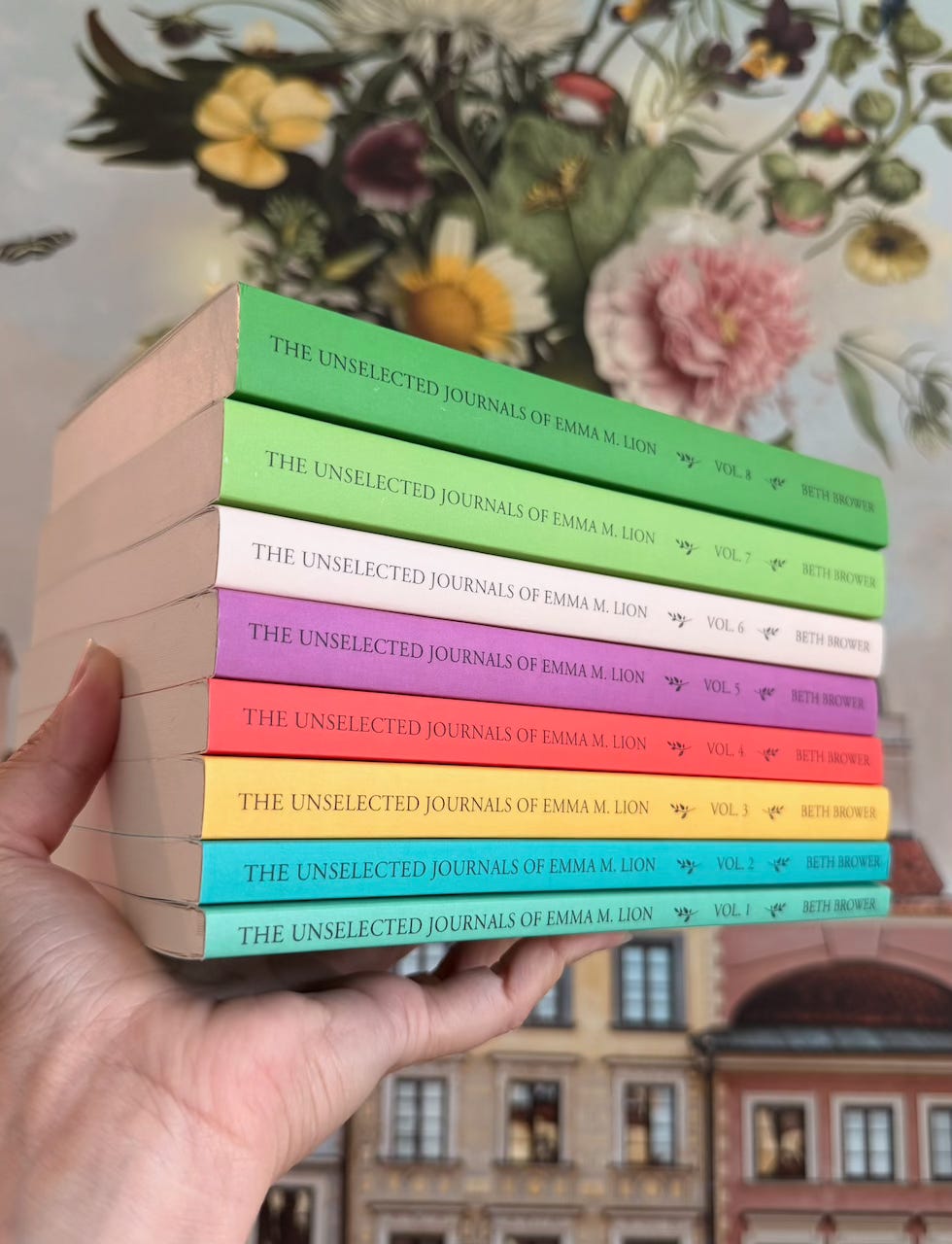
The colors chosen for the covers of The Unselected Journals of Emma M Lion by Beth Brower are bold and catching. This design choice might have started as a nod to “The Selected Journals of L.M. Montgomery,” which is a multi-volume non-fiction series published from L.M Montgomery’s personal memoirs. For Emma M. Lion fans the choice of colors for the cover designs has become a “frequently asked question.” We find it interesting that Beth has changed almost nothing about each cover between volumes or versions (paperback, hardback, digital, etc.) EXCEPT for the colors1. Therefore, the Emma M. Lion series will continue to stand out brightly on our bookshelves. For e-readers and audiobook listeners, this is possibly a detail you may have already overlooked. We both first read this series on the kindle paperwhite and couldn’t even see the colors! However, given the consistency of the colors no matter what version of the books you hold, we can conclude that these colors are not randomly chosen. Beth Brower has confirmed as much in interviews and has said some hold specific meaning (and some may not)…so let the RHSS speculations begin. We have provided this guide with some of our best guesses as why certain colors have been chosen. To help us with our analysis, we mostly tried to pull connections from the individual books, but where that proved difficult we were more creative and needed to reference Beth’s character color chart (see more on the RHSS colors and symbolism post). Even if this information is never confirmed by Beth, at the very least, this color guide might help readers remember which events happen in each of the volumes (using the colors as clues). Hopefully that will make it easier for you to go back and reread your favorite days!
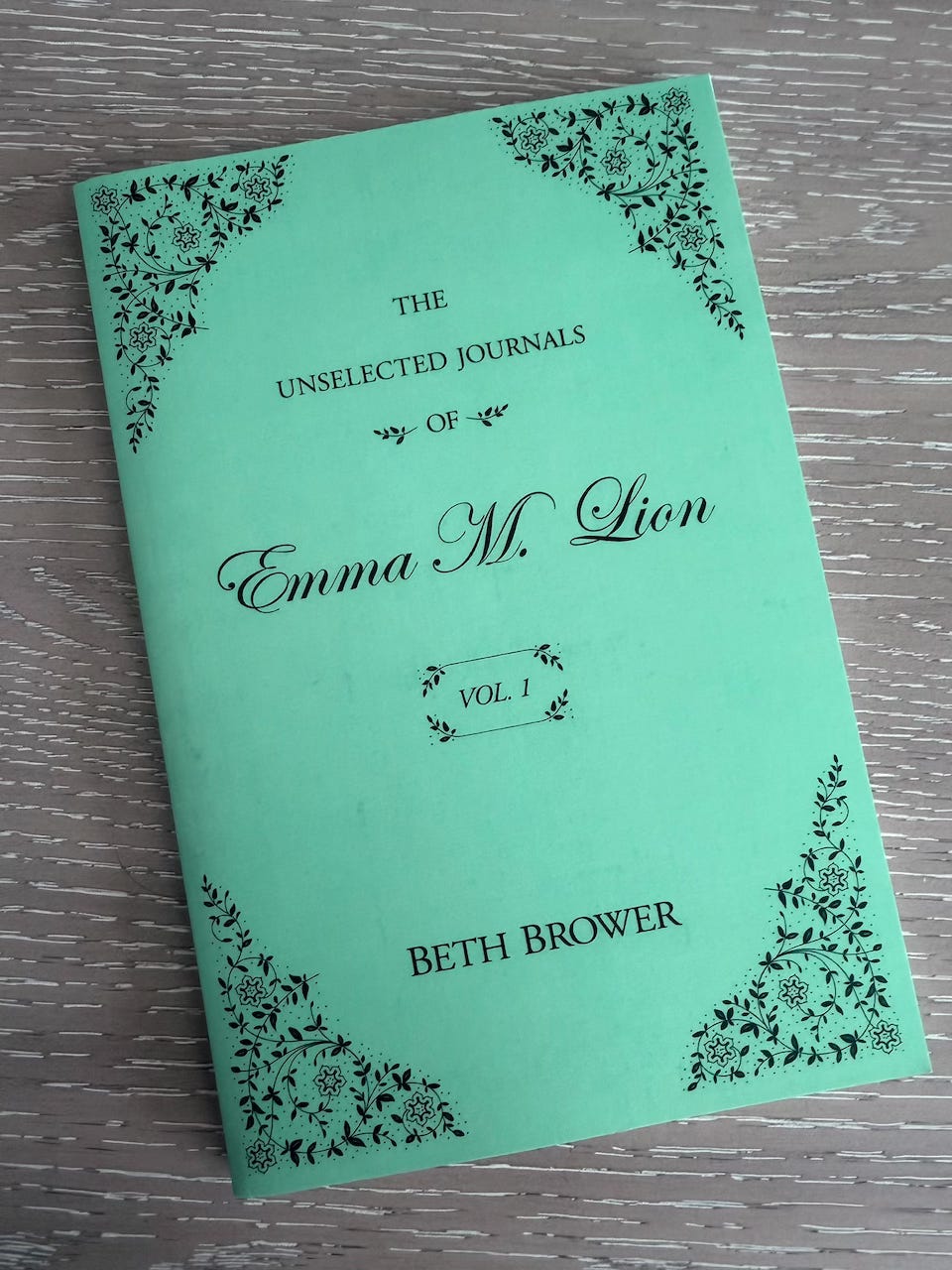
Vol. 1: Sea Green or “True Green”
This is one of Emma’s primary colors and very appropriate for volume 1 which is really just an “intro” to Emma. Emma’s eyes are described as this specific color. She even gets a dress from Madame Tasset of this color which would beautifully highlight her eyes. She is often associated with sea green and pink, and this combo is also linked to her parents. She describes her appearance by stating said she and her father share the same “uncanny sea-green” eyes. After church in Vol. 1, Mrs. Simpkins speaks to Emma about Hawkes missing church and plants the idea that he was possibly at the seaside. This shows how little Emma knows Hawkes in Vol. 1 because she instantly dismisses the idea, unable to even imagine Hawkes there. Miss Simpkins then says “Miss Lion, your eyes are like the seaside. Sea green and lovely as the day.” In later volumes, we learn Emma loves the sea and Hawkes, who was raised by the sea, seems to love water as much as he loves words.
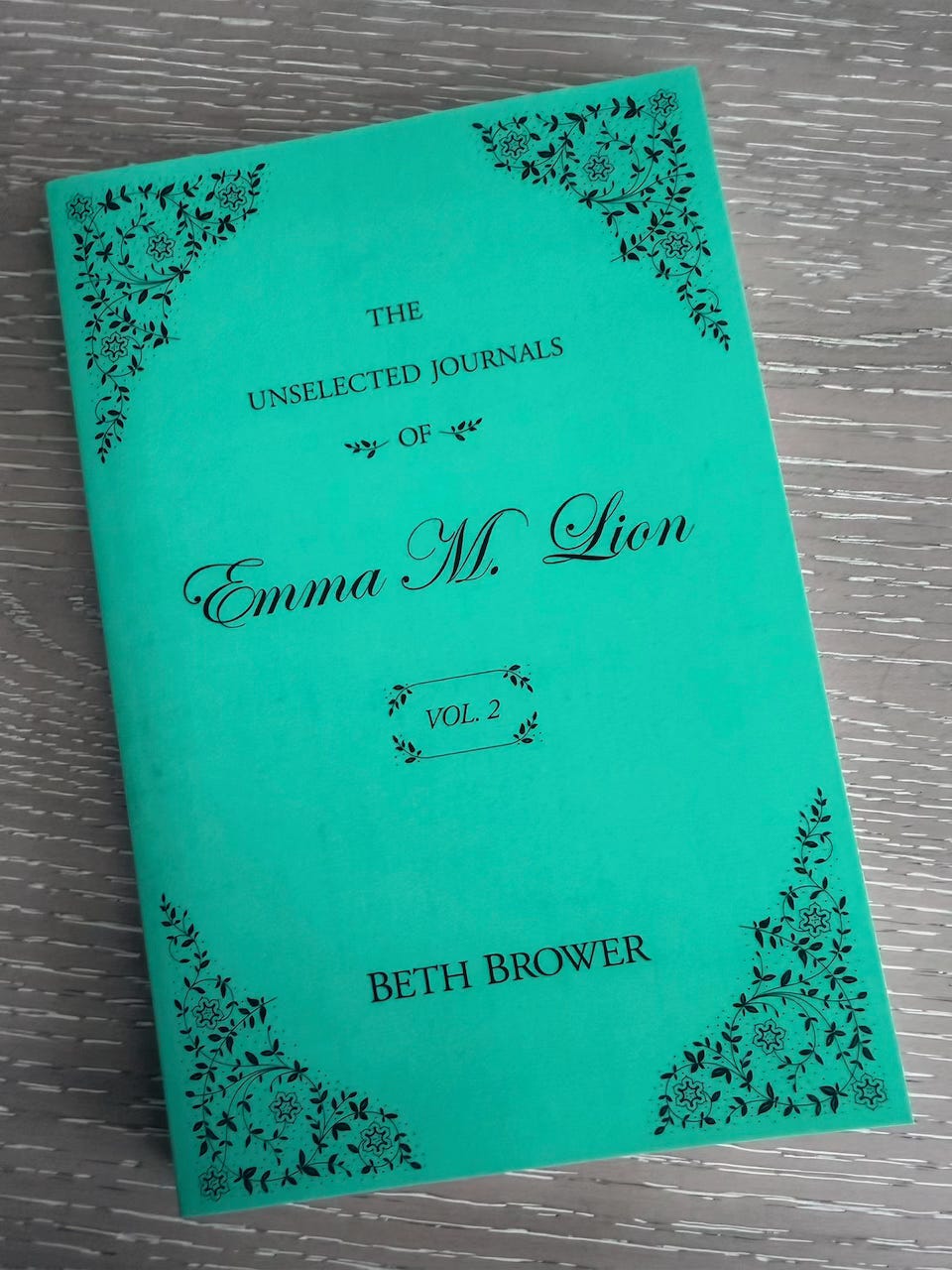
Vol. 2: “Light Aqua”
In Beth’s color chart, this color is labeled as “St. Crispians”. There is little direct connection to this color in the books. However if (to Beth) this color represents St. Crispians, we could conclude that at its essence Vol. 2 is an "intro" the cast of wonderful characters in this little corner of her life. We meet The Tenant, and the Duke of Islington, as well as other entertaining characters like the backrow Reprobates. Also, we learn about the mysteries, rules, and quirks of St. Crispians with its disappearing items, upside down signs, and the ancient Roman ghost.
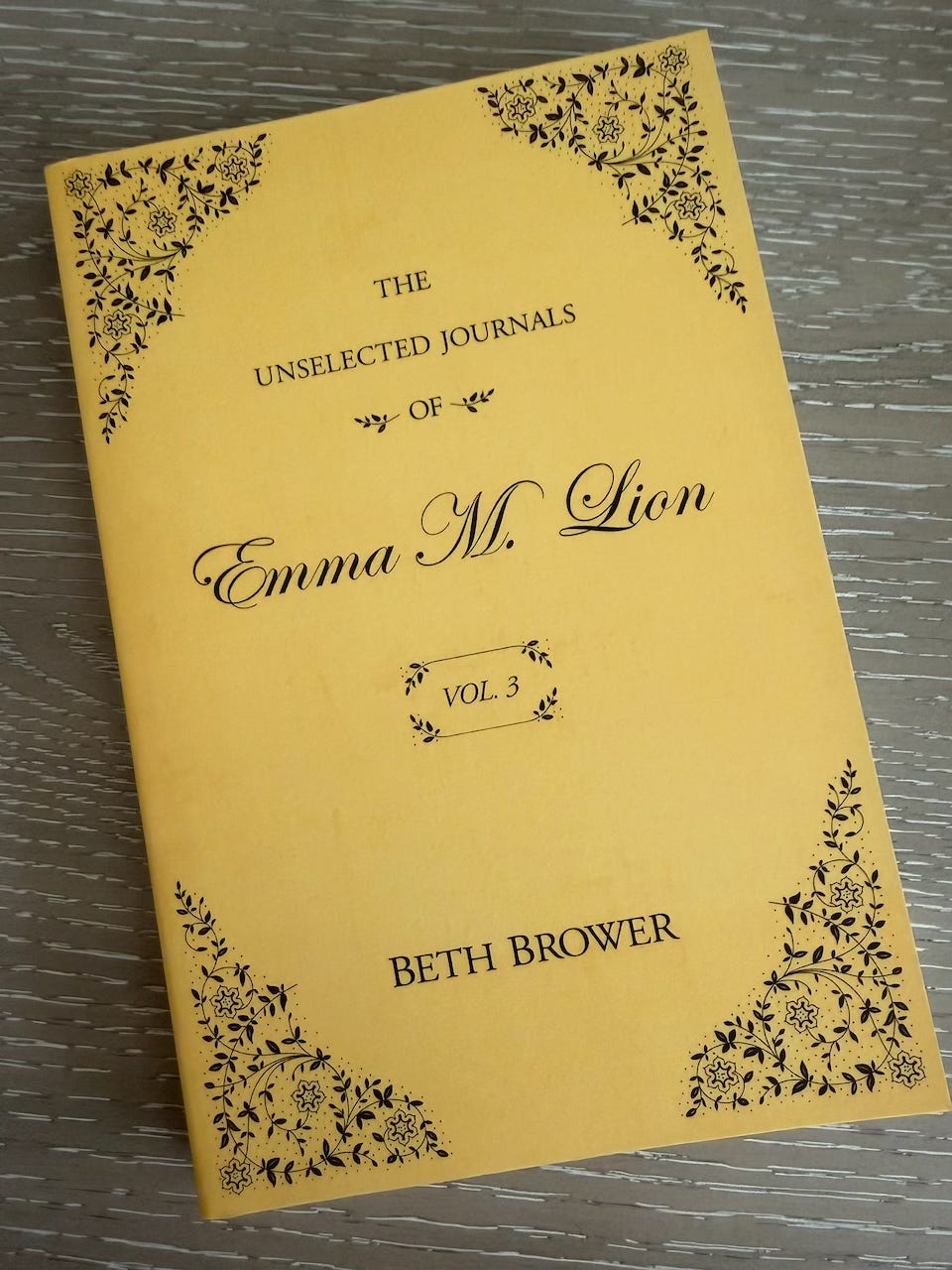
Vol. 3: Orangish/Yellow or “Sunburst Yellow”
One possibility for this color is found early in this volume. The salon, recently let to Pierce for use as a studio, was originally painted yellow. Emma comments on the color, “I like yellow, as a rule, but it doesn’t seem to complement this room very well. It is a bit ghastly, like a wizened old man insisting everyone be happy.” We think at this point in the series Emma is a bit like this room. She is acting like everything is happy, but she has lost her parents, had a disappointing education, been miserable working for Matilde the past three years, discovered her fortune has been squandered away, and lost her first and only love. Her future is open and there is plenty of hope on the horizon, but it is utterly unsecured and uncertain. We love Emma’s hope and optimism, but her heart at this moment on the timeline is not exactly sunshine yellow. In fact, we know her life is going to get a lot more stormy before the clouds part to the sunshine again. She had a choice to repaint the room slate grey (Pierces color) or midnight blue (Hawkes). She chooses the blue. Pierce agrees and paints the room blue and his garret the grey (See Paint Colors for more on this).
A related, but slightly different theory for this cover color, is to say this the cover is yellow because Emma is so positive despite her circumstances. Yellow is typically associated with sunshine and happiness, and is generally a color used to describe positive feelings and emotions. Emma is innately hopeful and optimistic, so this color could still fit her instinctual core personality traits. Even if she has had a series of unfortunate events occur in her life, it does not change who she is or chooses to be. Emma even says the following in Vol. 3: “I learned a long time ago that my happiness has to be separate from the things beyond my control… it isn’t in my nature to choose sadness if I can help it.” So even though the outlook might look bleak, Emma chooses joy. This beautiful attitude is partially what makes her so relatable and inspirational as a fictional character to us readers. Choice is a power we can all find within ourselves too.
One more possibility, comes from associating this color with a certain flower first mentioned in this book, and mentioned several more times through the series: The Dandelion. Emma writes on Aug. 12: “I have taken the entitled Meaning of Flowers from the shelf in the breakfast room, and have been leafing through. Beautifully done. I especially like the dandelion.” Dandelions mean wishes and hopes, resilience and strength, healing and transformation. This is a good point in the series for Emma to be focused on these ideals. The of road of life is long, but healing and finding joy is not a destination. It is not arriving at a specific event, achieving a long awaited goal, or even meeting a certain person. The road to hope and transformation is a daily journey; a series of choices and awarenesses taken one step at a time.
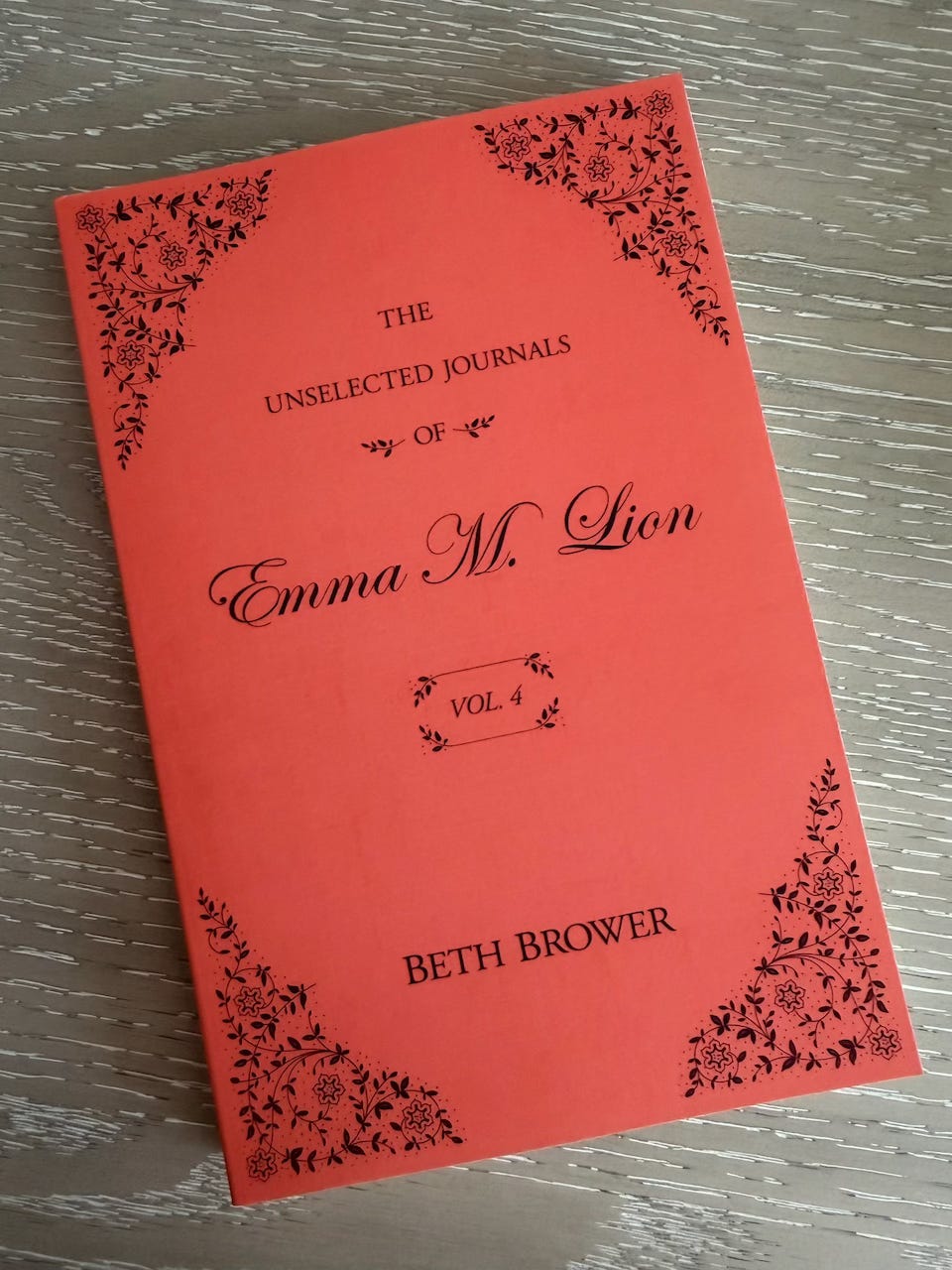
Vol. 4: Red
Certainly the most fun association with this color in Vol. 4 are events surrounding Emma’s visit to the Drunken Duck. Emma wears a red dancers costume and doesn’t look "Half So Bad Once Dolled Up" with rouge painted onto her cheeks and lips. The following quote from Aunt Eugenia in Vol. 8 reinforces the association of the color red with the drunken duck: “Now Emma, you are wearing red. Do Not smile overly much. It makes one look like a dance-hall girl.”
Another idea for this color inspiration is that red is often associated with matters of the heart. In Vol. 4, Emma’s heart is figuratively exposed and injured at Maxwell’s burial. Similarly, Pierce “sees red” via his anger toward Evelyn after the funeral. His anger is physically manifested by breaking Evelyn’s nose causing a bloody (red) mess, literally.
Lastly, let’s not forget a key moment at the end of Vol. 4 the story of the Spartan army's famous battle against Xerses! The Spartan uniform is famously characterized by their iconic red uniforms and accents, specifically, their crimson tunics and cloaks. The color represented strength and intimidation to their enemies and was practical for hiding blood and injuries incurred while fighting in battle. In the graveyard at the end of Vol. 4, these four friends unanimously recognize the significance, rarity, and value of their friendship- aptly described from that point on as “Alchemy.” They spend the rest of that evening listening to Hawkes read and imagining the tragic heroics of the Spartans as they decided to defend their empire, stand together, and fight even “in the shade.” Just as the “Alchemy” are destined to do for one another.
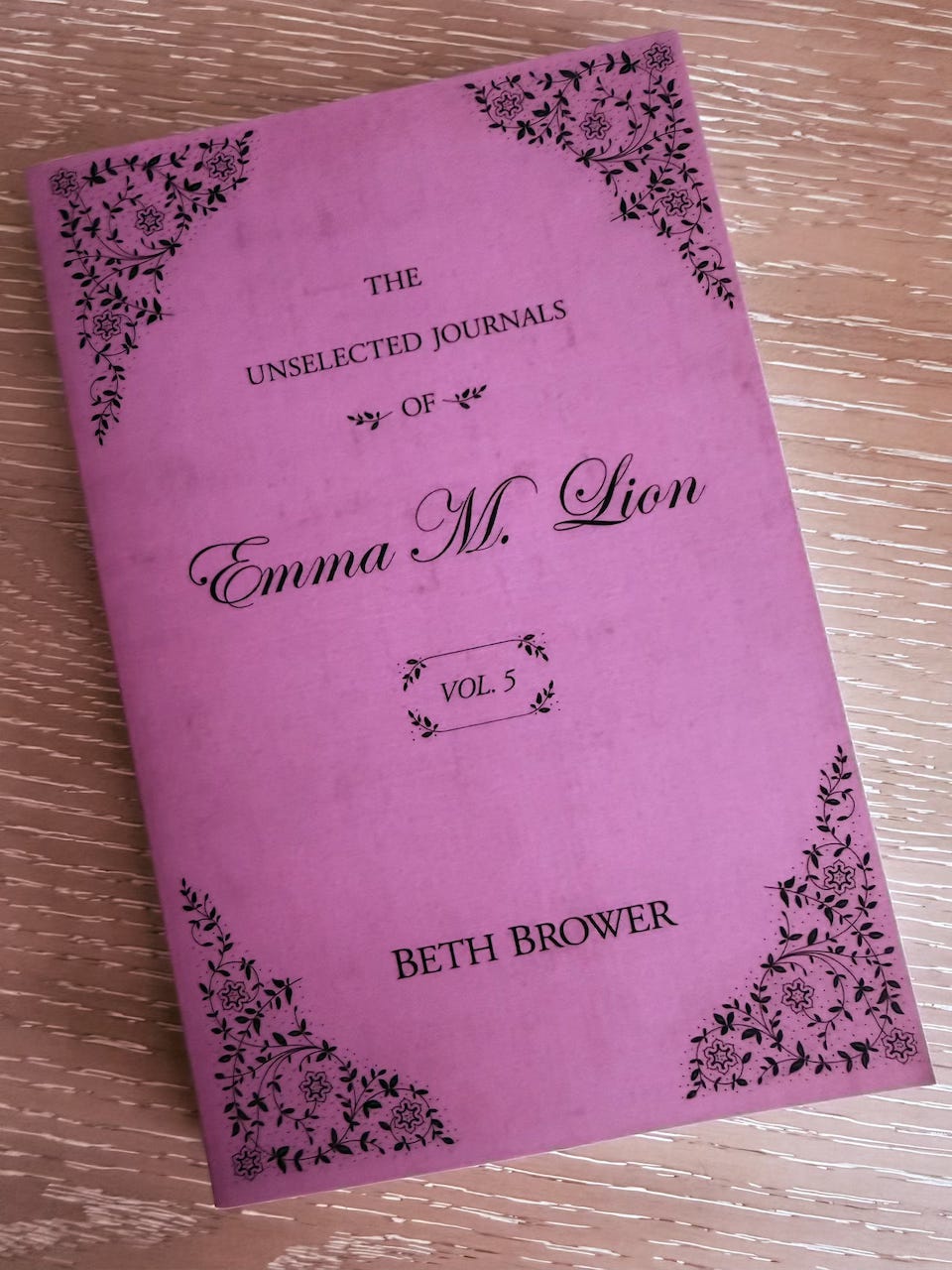
Vol. 5: “Violet”
After a death in Victorian London, family, close friends, as well as many household members would wear certain colors to reflect their official state of mourning. There were unwritten rules during these periods concerning the appropriate timeframes for mourning as well as colors and fabrics that were socially acceptable for mourners to wear. Plum/purple/violet are appropriate for “half-mourning.” This phase takes place after the “all-black” stage has lapsed. The cover of this book is violet most likely to represent the overarching mood of the entire volume. Even though Maxwell technically died years ago, the two months represented in Vol. 5 are the most significant in Emma’s healing and processing the grief of that loss. Although mentally denying she is in mourning, she cannot explain to herself (or her friends) why her attention span is waning, her body is wasting, and her overall attitude is more subdued. Nov. 7 Emma notes after looking in a mirror “I’m looking worn on the corners… an unflattering smudge of purple beneath my eyes.” Her friends are concerned too, but trying to let her process in her own ways as much as they can allow. The purple smudges under her eyes are visible signs of her grief. Her outward state is beginning to reflect the inward wreckage of her heart even though she has tried to ignore it.
Also, because this is a purple cover, and because paint metaphors have been used as explanations for other volume covers, we would be remiss to avoid noticing that Parian paints the trim in his room violet in Vol.5. Emma thinks it is a good change for the rooms that were formerly hers. This may be a stretch, but perhaps letting go of her feelings of ownership of those rooms, accepting her new place in the garret, and painting her old rooms in half-mourning colors, is a metaphor for her healing process. She is still working toward acceptance of the other tragedies in her life which are represented by the loss of those rooms, i.e. the loss of her parents and the loss of her dreams of reasonably easy comfort as the independent owner of Lapis Lazuli.
We also don't want to forget in Vol. 5 we have the entertaining and endearing funeral for the beloved Elizabeth, the sweet pea. Sweet pea flowers can be a variety of shades but are commonly known by a purple-pink hue. So if you are having trouble remembering which book that scene is found in, makes sense that it would be found in the violet (half-mourning) volume.
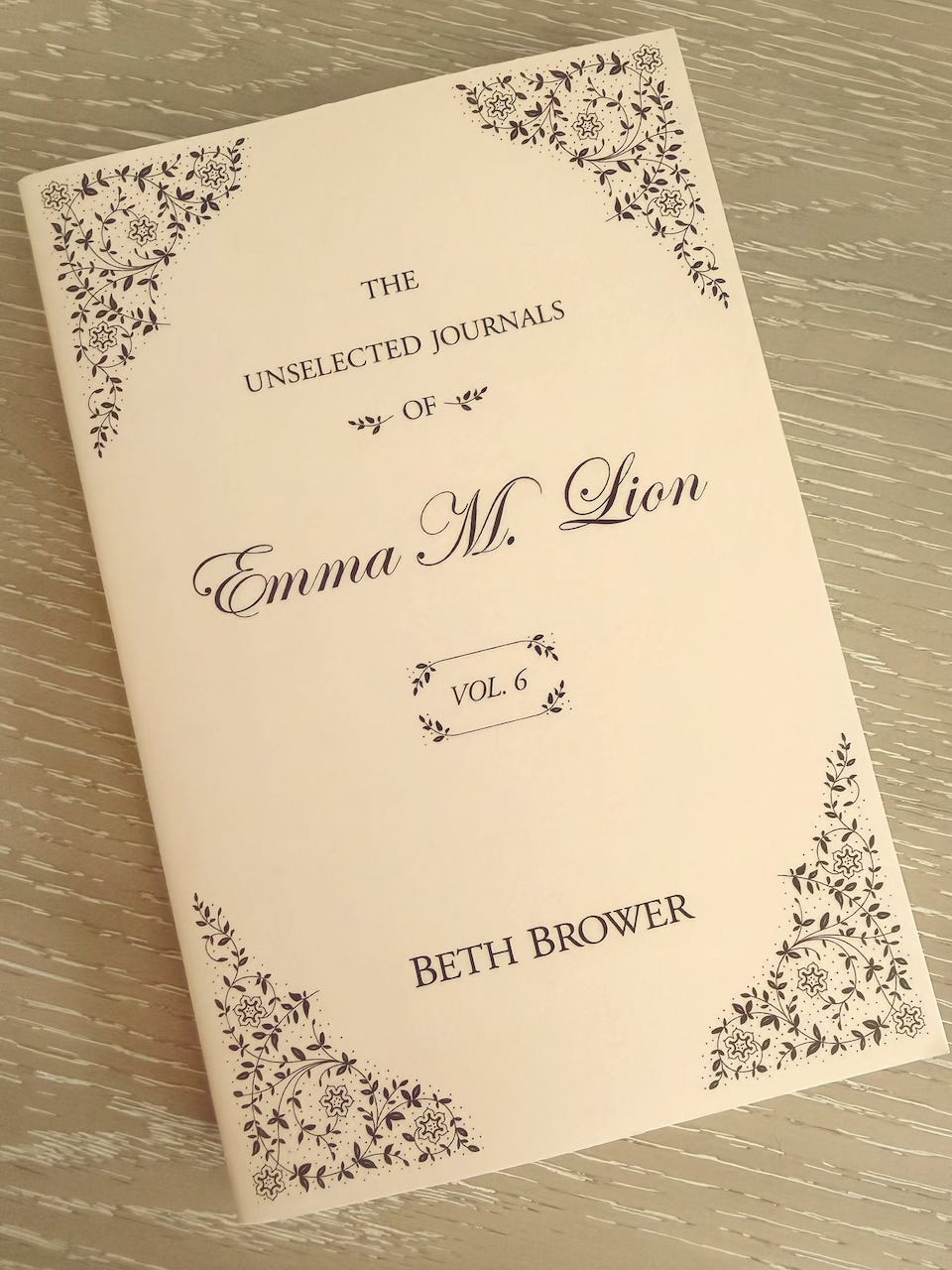
Vol. 6: “Jasmine” or neutral
This is the most difficult color to even name or describe, so naturally we also had the hardest time linking it to as much textual evidence in Vol. 6. Perhaps you all have some additional theories, but here were a few ideas we came up with. We will start with the LEAST likely.
This looks very close to Charles Goddard’s color “Jasmine” on Beth’s character color chart. In this book, Charles appears only once when he visits Lapis Lazuli on Emma’s birthday. While it is very amusing to imagine her struggle to shoo his ignorant person away, it is not what most would consider a highlight of the volume. A few days later, however, Aunt Eugenia visits because of Charles Goddard and his tall tale from Guy Fawkes night. She came to investigate his allegations in person. Aunt Eugenia mistakenly identifies Parian as the man that intimidated and cursed at Charles. Chaos and hilarity ensue. This is one of our favorite laugh-out-loud scenes in the whole series. Would we personally make the entire cover of the book remind us of this one scene? Yes. Yes, we would.
The color could also be described as “neutral,” like the color of clean unbleached linen. We imagine this book could symbolize a clean slate for Emma. The two months right at the top of the calendar year (January and February) are really a breath of fresh air, and a reset after such a heavy season of grief. These months are often snowy in London marked by pale sunlight, so maybe that is meant to be reflected by the color. The New Year is a prime season for many people to set new resolutions and goals. Jan. 13 Emma reaches her age of majority. She truly believes this gives her a fresh start in the eyes of the law to be in charge of her own choices and destiny as an adult independent woman.
Last idea: at this point in the series Emma thinks she is very “neutral” on her relationship feelings for all the men in her life. She is starting over in every way after grieving Maxwell, and is really not certain she is interested in marriage at all (especially not any time soon). However, a monkey throws a wrench into her grand ideals and she kisses Pierce by the end of Vol. 6. There is still a relatable lesson in this unexpected shift. We cannot always plan every aspect of life. Sometimes we just have to take the twists and turns as they come, and make the best decisions we can in those moments. Emma has been very clear about her attraction to Pierce since she first saw him, but her feelings were not all consuming, nor was she willing to compromise her other goals to pursue marriage to him (or any other man even as a solution to her financial woes). Therefore, even though the kiss with Piece propels their relationship to a significant place she was not expecting to traverse, neither the kiss nor Pierce should merit the basis for the headlining color for the novel. Emma still doesn’t know what the future holds, so choosing to color the novel “neutral” and sticking with a “blank” perspective as she recalibrates her life still seems fitting.
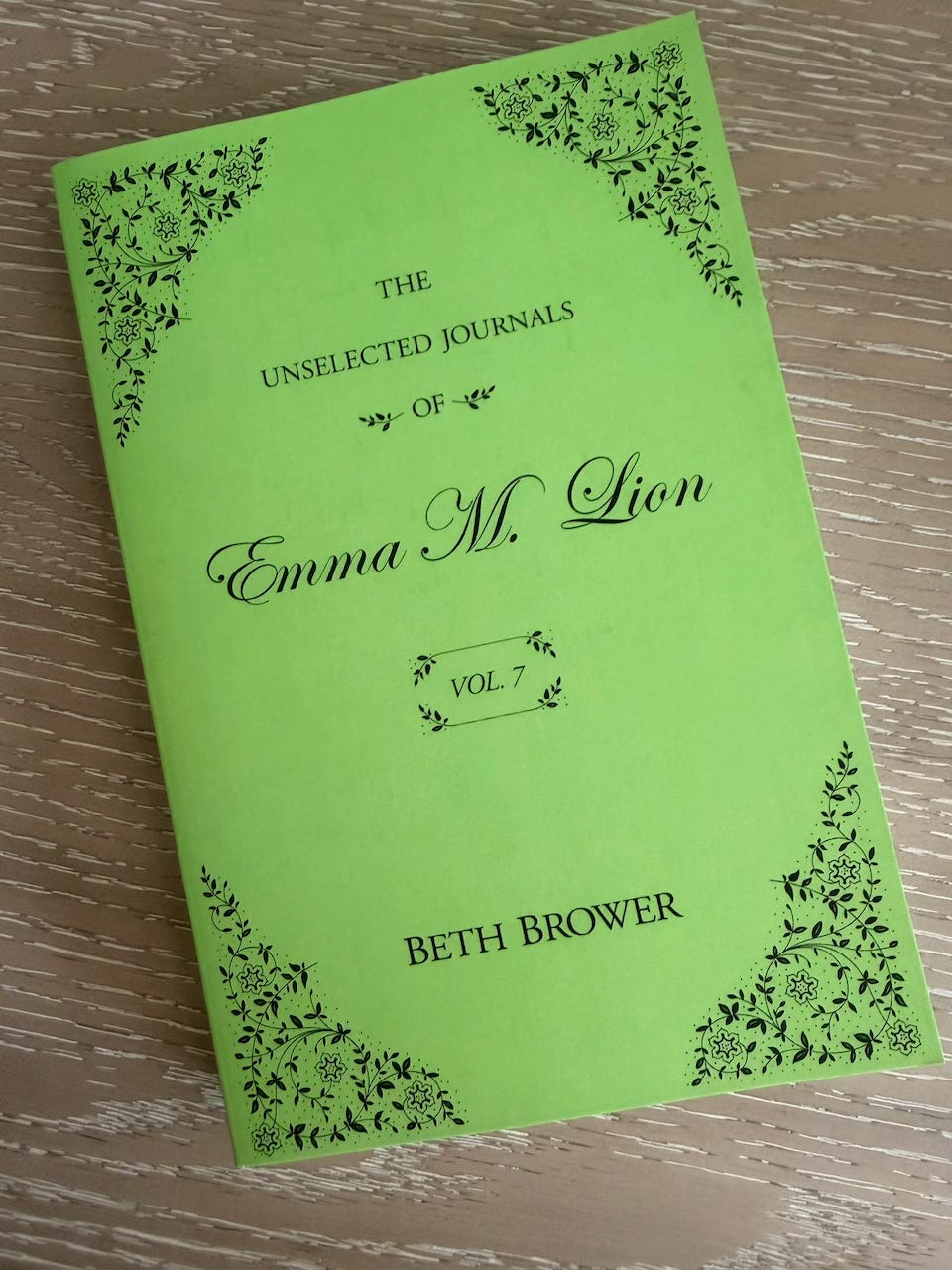
Vol. 7: “Spring Green”
March/April is the beginning of spring and considered a time of new growth and a birth in nature. Emma’s life during these months is very much aligned with this imagery. She is experiencing growth in all her existing friendships as well as a new “consideration” of a romance with Pierce. One night at the beginning of March, after leaving dinner at Islington’s, Emma says “Pierce, Hawkes, and I stepped out into the square, the scent and press of early spring evident even in the late hour. We were in easy company with one another.” The Alchemy’s friendship is in its “Spring”, its roots have been firmly established and now it is in the essential growing/forming time frame. This is a time during their friendship when everything is sweet, easy, and still untested by the storms of summer or strains of winter. The growth now is important to withstand whatever trials will lay in their future. Emma’s personal relationships are growing too: Pierce-romantic, Islington- Guardianship (scheme chosen by Islington himself instead of a marriage proposal), Hawkes- new discoveries of his personal life and habits. She maybe even has some budding (but unspoken) feelings developing for him or him for her.2 Even the side characters are getting a little “twitterpated” (for you young folks: that’s a word from Bambi and has nothing to do with X (formerly Twitter). Mary runs into a pole because she is so distracted by the professor. The Professor is noticing Mary too, and Emma gives him a little unsolicited insights into Mary’s thoughts toward him. We discover Chambers and Saffronia have some interesting banter, and a long standing history that seems promising for both of them. Even Chambers and Emma strike the beginnings of a chord of friendship (through trust and mutual respect) during her journal rebinding collaborations.
In addition to relationship growth, Emma is experiencing the beginnings of a greater calling for her life. She is looking long-term and trying to decide what academic or workplace pursuit she can fit into for the rest of her life. On Apr. 8 when she speaks with Professor Fletcher, we are reminded again of her desire for a more complete education. “‘Plutarch,’ Professor Fletcher repeated. ‘For the very spring and root of honesty and virtue lies in the felicity of lighting on good education.’ I had never heard the quotation before. Owing to my dismal time spent at Fortitude. No felicity, no lighting. Professor Fletcher was curious. ‘Are you endeavouring away on a scholarly work, Miss Lion?’ ‘Yes. No.’” This connection to the Professor is likely the beginning of an important connection especially if Emma finds a way to commit to attend a university.
Palm Sunday and Easter Sunday take place in this book too. Mar. 27, “There is no contentment like that of sitting at one’s window, reading a book, with the sounds of birdcall and the promise of spring.” Apr. 12, “I enjoyed the view of the park coming into bloom. Spring gives us more than we deserve. The light breeze twining about the frothy blossoms.” We believe these two quotes are not just about nature, and the setting of the time of year, they are also used to reflect Emma’s relationships, values, ideas, and life.
Lastly, Lapis Lazuli House gains the company of Fitz the Fern. (See our post on Fitz the Fern exploring more meaning and symbolism). That’s reason enough for a nice leafy green cover.
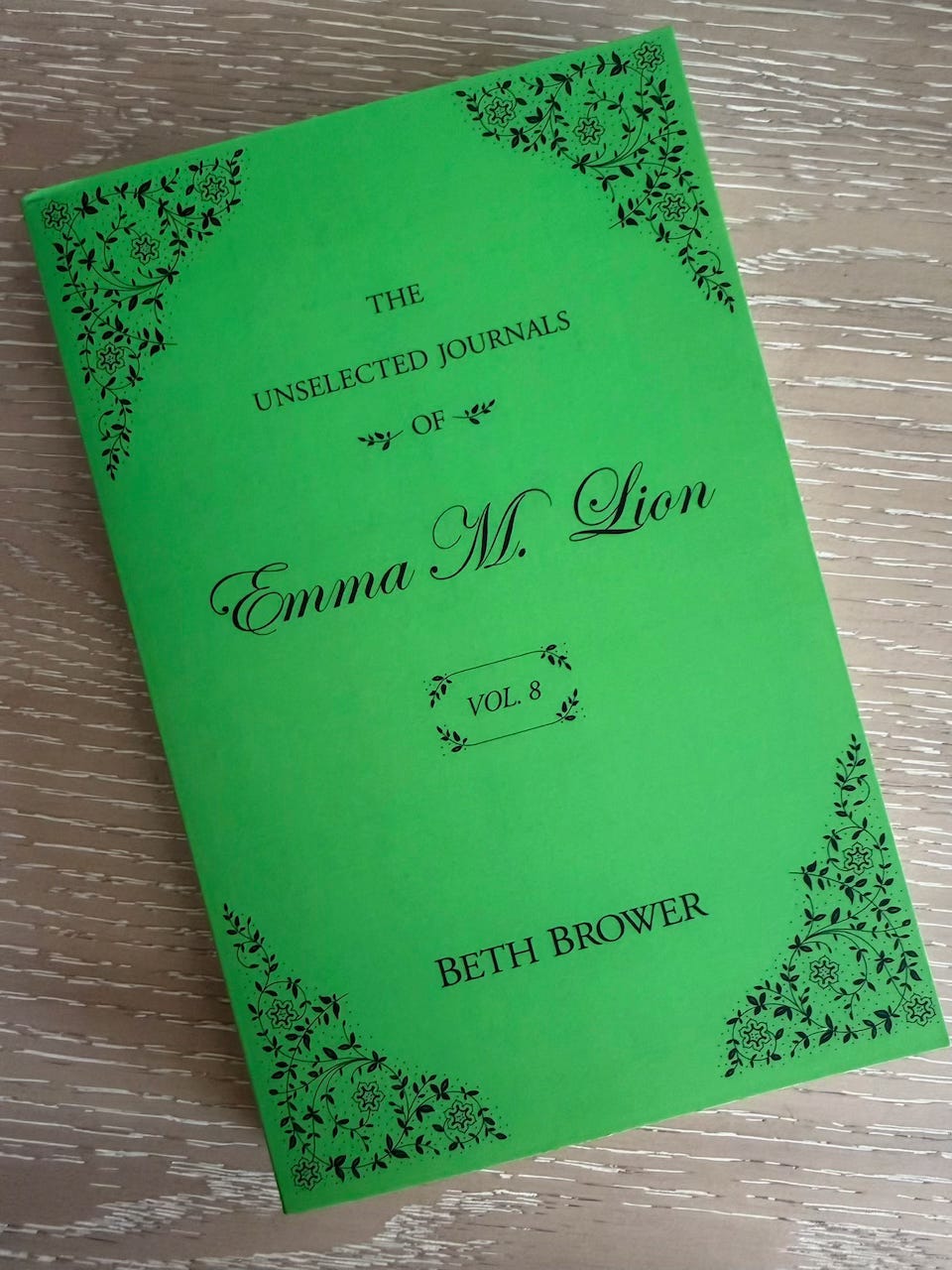
Vol. 8: “Grass Green”
This color makes us think of Stonecrop and all things summer and natural. Additionally, green is Islington’s primary color symbol. In Vol. 8 we are thrown into the middle of the Duke's personal spaces, family, and secrets which casts a green tint onto more than half of the events in this book (ex: Roland buys Emma the fern book and wraps it in green paper. Emma’s pith helmet has a scarlet and green band going around it. The flag at Stonecrop is red and green. Several of the rooms at Stonecrop are decorated prominently with green, etc). Similar to the themes of Vol. 7, there is a freshness and rebirth found in nature and in God’s green creation. By the end of May, Emma is starving for it. On May 31, she writes:
“But is not the month of May supposed to be a clear, green propulsion of all things new and brilliant? To be renewed but also have some faultless sun bless such a renewal? Yet here I sit on the final day of the month, exhausted—body, mind, and spirit. I suppose Shakespeare finds fit purpose here. Rough winds do shake the darling buds of May. Such has been the tumults. But there now. Perhaps it is time to take some advice of the Islington variety. “Remember Stonecrop,” he had said. Stonecrop. The promise of acres and acres of woods and skies, and the sort of recorded history in which very few families are steeped. Stonecrop sounds like a verb, meaning the reclamation of serenity which, by birthright, should belong to May. June it will have to be. And why not? Did not Shakespeare also write, When June comes dancing o’er the death of May? Well then. May has exacted a good many things. So come, June, come, and tell me every secret.”
The romantic poets speak very heavily to this ideology of the goodness and purity of nature. Since Emma is primarily reading Wordsworth and Coleridge at Stonecrop, she is learning/seeking that sort of feeling when she finally arrives at Stonecrop. By the end of June, Emma writes very eloquently about the peace she has discovered from her time spent in the blessed days among the grass and trees:
“These long days out of doors feel like coming home to a place to which I’ve always held the key, but was told it should be put away. But, oh! There has been sovereignty of self in this place—of body, of spirit, of the intangible magic which sews the two together. To shout and run. To lie in tall grasses and watch the wind play the sunlight both true and false. To feel the building threat of rain and watch it crash to earth from the tenuous safety beneath a tree rather than from behind a window.”
Emma goes on to say how this time of freedom in the country allowed her to re-connect and care for her inner-child and revive her natural wildness, unpruned by societal rules. As readers we noticed this right away because Emma behaves immature and childish (chasing cats, yelling on rooftops, catching butterflies, etc). However, we also believe this new side of Emma was intentionally written this way, and is a necessary and key part to the renewal and growth Emma needed to experience at Stonecrop. In clear self-awareness, Emma writes it best herself:
“I am, I suppose, satiating a long drought. My childhood soul has been left too long abandoned. How do I best find it in London? At times I feel my body has betrayed the girl I was, growing past the lithe limbs hewn in independence. We are to be fit for the purposes of adulthood, I know this. Childhood anticipations are traded with the shouldering of heavier things. But these days, these stones-tossed-in-tall-grass days, have stretched my muscles, recalled past forms, and I am remembering how it is to feel, to follow the instincts of something young yet ancient. To step outside the province of maturity and marvel.”
When her parents died, Emma was forced to grow up too quickly. She had to make decisions about property, education, and money that were beyond her years and knowledge without wise counsel or guidance. Connecting to those years of lost youth will remind her of her parents and times of peace and joy. After so many years of grief and just surviving, rejuvenating this young and wild heart was essential for her to remember her sense of self and to healthily move on. This will remind her how to find happiness and peace in her future life and decisions.
Vol. 9: ?
Want to make some predictions?? Leave them in the comments! We will be back here again soon...
Though we are enjoying that the new Bloomsbury covers will have a little more variety on the cover illustrations.
Why do we think this about Vol. 7 specifically? Emma learns of the existence of a “Pear-Scented-Lady” causing her to openly wonder about Hawkes’ romantic inclinations for the first time and express jealousy toward this unknown woman. She sleeps on his shoulder, and he quotes Shakespeare to her in the morning (of course, she loves it).
Wow, love this deep dive! I’m so curious to see what color is next. Maybe pink for Arabella’s season? I did notice that on the hardcovers, the border graphic changes with the year of the journals.
This post is amazing. Thank you for articulating so well the cover colors